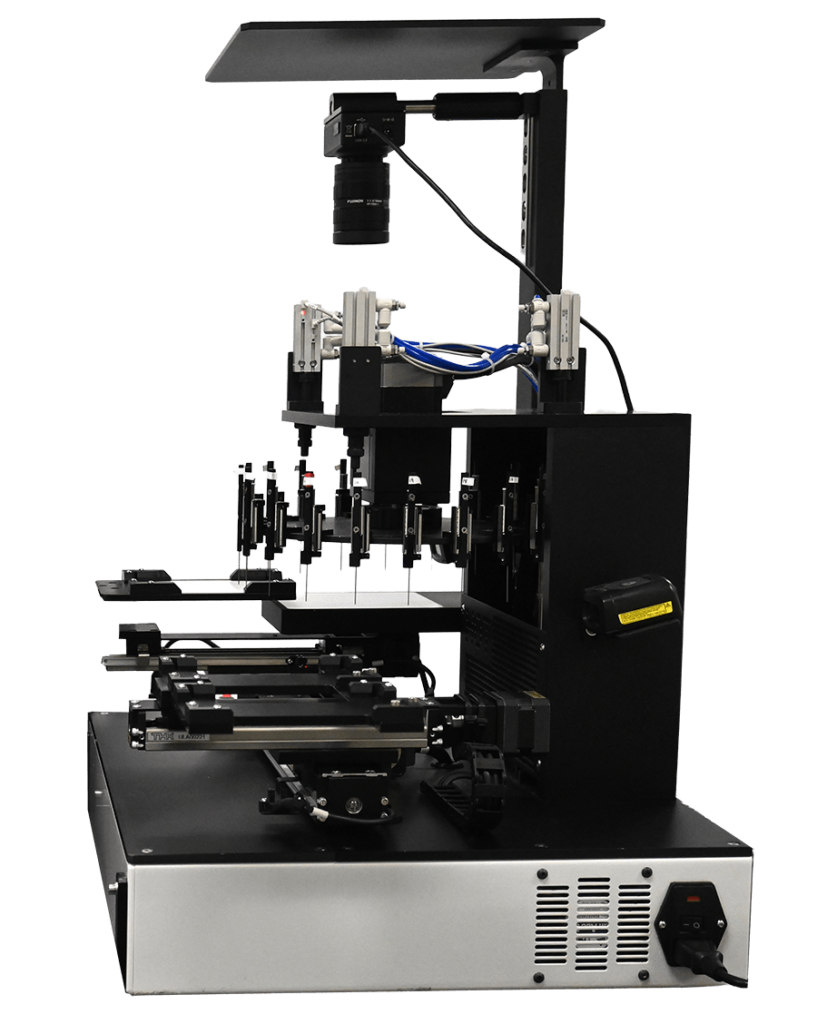
RapidPick MP is designed for workflows where speed, scale, and consistency matter. Its 20-pin architecture enables picking, inoculation, cleaning, and sterilization to occur continuously, supporting throughput of up to 3,000 colonies per hour.
Combined with RapidPick imaging and software, MP automatically detects and characterizes colonies, allows users to define which colonies should be selected, and captures images and colony metadata to support reproducible, traceable workflows.
For labs requiring greater unattended capacity, RapidPick MP can be expanded with automated plate handling, providing a path from standalone high-throughput picking to walk-away automation.
A high-throughput automated colony picker combines plate imaging, automated colony detection and selection, and robotic picking to isolate large numbers of microbial colonies with less manual intervention. These systems are particularly useful for screening, strain isolation, library construction, synthetic biology, and other workflows requiring hundreds or thousands of colony picks.
RapidPick MP is a 20-pin high-throughput automated colony picker designed for laboratories processing large numbers of colonies. It combines full-plate imaging and colony detection with continuous multi-pin picking and can process up to 3,000 colonies per hour, with average inoculation efficiency of >99%.
RapidPick MP can pick up to 3,000 colonies per hour. Its 20-pin architecture allows colony picking, transfer, pin cleaning, and sterilization to occur continuously, increasing throughput for large-scale colony isolation, screening, and library-building workflows.
RapidPick software images the complete source plate and detects and characterizes colonies. Users can define which colonies should be selected based on characteristics including size, shape, contrast, and separation, while retaining the ability to review and edit selections before picking.
RapidPick uses image analysis and user-defined selection criteria to detect and characterize colonies based on morphological and image characteristics. The resulting images and colony meta data can also support more advanced, data-driven workflows in which external analytical or AI models determine which colonies should be selected for downstream processing.
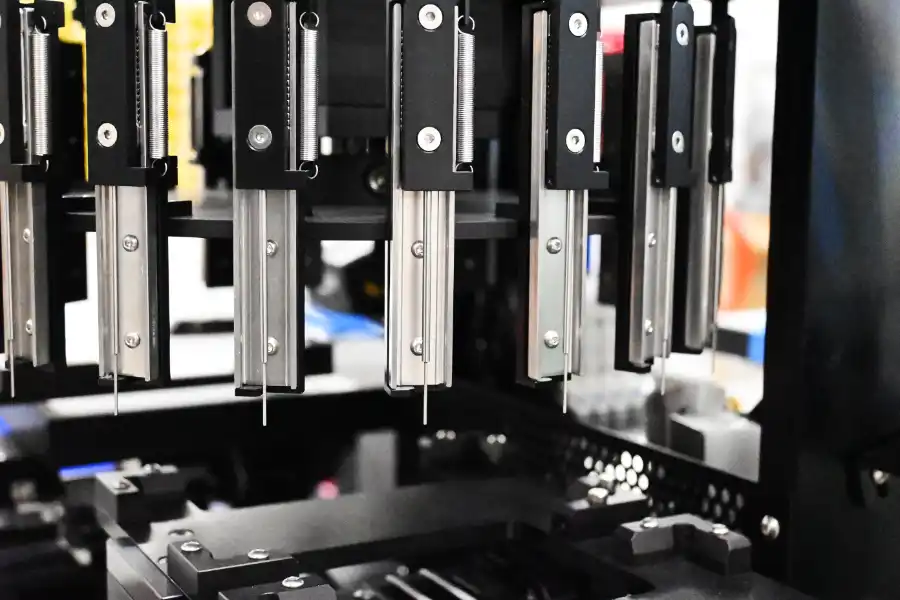
RapidPick MP uses 20 reusable tungsten pins in a continuous process. While colonies are being picked and transferred, other pins can be cleaned and heat sterilized. This parallel operation enables high colony-picking throughput while minimizing carryover between samples.
RapidPick MP can pick colonies from Petri dishes, NUNC OmniTrays, and ANSI/SLAS-footprint microplates and supports common 24-, 96-, and 384-well destination formats.
Yes. RapidPick MP can operate as a standalone high-throughput colony picker or be combined with automated plate handling to increase unattended capacity. It can also be incorporated into broader automated workflows that include upstream sample preparation and downstream incubation, liquid handling, reading, or analysis.
Both RapidPick SP and MP use the RapidPick imaging, colony detection, selection, and picking platform. RapidPick SP is a compact single-pin system designed for throughput up to 250 colonies per hour, while RapidPick MP uses a continuous 20-pin architecture for high-throughput workflows requiring up to 3,000 colonies per hour. SP is particularly suited to benchtop and space-constrained environments, while MP is designed for higher-volume colony picking.
Copyright 2026 ® Hudson Lab Automation
Get the details in "Adaptable Automation for Rapidly Changing Labs"