Zebrafish, or Danio rerio, are more than just striking aquarium fish. Because of their small size, regenerative capabilities, and fast embryonic development, zebrafish are one of the most commonly used model organisms in developmental and genetic studies and are ideal for high-throughput whole-organism phenotypic screening. They also conveniently share around 70% genetic homology with humans.
“Within just five days of fertilization, you can assess dozens of developmental and behavioural endpoints simultaneously in a single organism. That whole-animal context captures biological complexity that cell-based assays simply can’t replicate, making zebrafish an incredibly powerful bridge between in vitro testing and mammalian models,” shares Dr. Lisa Truong, Deputy Director of Sinnhuber Aquatic Research Laboratory (SARL) and Associate Professor, Department of Environmental and Molecular Toxicology, Oregon State University.
Automation has given us the consistency we needed. When your science depends on experiments being executed at the right time, and the same way every time, that opportunity practically screams for automation.”
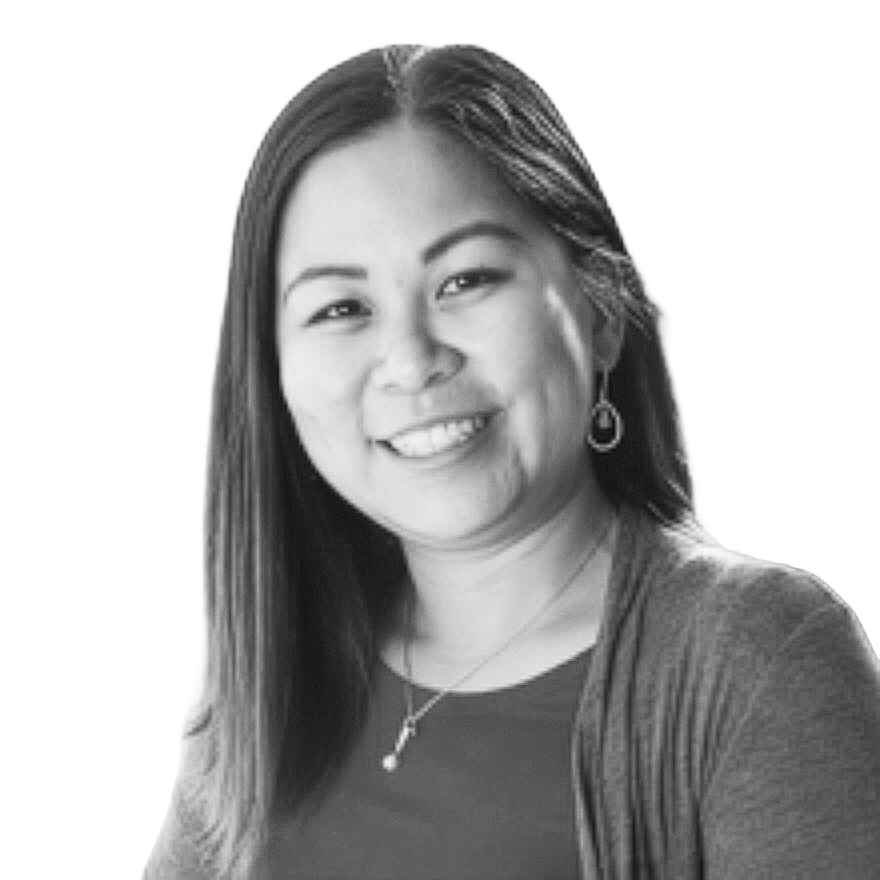
Dr. Lisa Truong, Deputy Director of Sinnhuber Aquatic Research Laboratory (SARL) and Associate Professor, Department of Environmental and Molecular Toxicology, Oregon State University.
SARL at Oregon State University is the world’s largest specific pathogen-free zebrafish aquatic toxicology facility. Including a 17,000 square foot self-contained fish hatchery for rearing fish, it has a low maintenance system housing over 40,000 fish, including more than 20 transgenic zebrafish lines.
“SARL’s mission is to advance chemical safety science through high-throughput biological testing, including high-throughput zebrafish screening,” says Dr. Truong. “Our goal is to generate the kind of robust, reproducible toxicological data that industry and regulatory agencies like the EPA and FDA can rely on to make evidence-based decisions about chemical risk. We have screened approximately 6,000 chemicals to date.”
Dr. Truong’s interest in toxicology and her research focus grew out of curiosity; she is driven to find out why some chemicals cause adverse effects while others have no impact on living systems. “What gets me up in the morning is wanting to understand how the intrinsic properties of a chemical drive toxicity and then using that knowledge to inform chemical safety decisions and protect human health,” says Dr. Truong.
One of the core challenges faced by chemical safety scientists is that existing safety information lives across disconnected platforms. This means labs spend time, money and resources trying to resolve issues when someone else, whether in the same institution or across the world, may have already addressed the problem. There are additional issues with reproducibility as labs often work in silos and methods are allowed to drift.
“Even subtle differences in how assays are run from lab to lab can make it almost impossible to compare data and draw meaningful conclusions across studies,” explains Dr. Truong. “Open communication and collaboration around standardizing methods is what gives the broader scientific community confidence in the data we’re collectively generating. As a lab funded primarily by tax dollars, we have a real obligation to ensure the data we generate is robust, rigorous, and reproducible. We work hard to minimize variability study to study, but zebrafish are sensitive; even subtle differences in how an experiment is handled can shift developmental timing and change your answers. In toxicology especially, where our findings can directly influence regulatory decisions and public health, reproducibility is an obligation.”
The real scientific opportunity in toxicology research lies in uncovering structure-activity relationships and understanding how the structural properties of a molecule can predict its biological behaviour. However, as Dr. Truong and her team started to scale up their research to accommodate this, their labour costs increased and capacity became an issue.
“So much of what we were doing was scheduled and routine. One of the most honest realizations we had was that our limiting factor wasn’t scientific — it was finding enough undergraduate workers willing to come in to perform the same repetitive tasks day after day,” states Dr. Truong. “When your ability to advance science is constrained by scheduling and human fatigue, you know it’s time to rethink the model.”
Being able to scale with automation frees up scientists’ time for them to focus on higher-value work, while ensuring that the routine, precision-critical steps are handled consistently and reliably every single time. “Automation has given us the consistency we needed,” continues Dr. Truong. “When your science depends on experiments being executed at the right time, and the same way every time, that opportunity practically screams for automation.”
Dr. Truong’s advice for those considering automation is to ensure that there is a step-by-step understanding of the team’s processes, including where the repetitive tasks are, where human error can creep in, and what levels of consistency are expected.
“Automation will pay for itself many times over in consistency, scalability, and the ability to focus your team’s talent on the science rather than the logistics, but it’s important to remember that automation is only as good as the clarity you bring to it,” Dr. Truong explains. “You also need to go in with realistic expectations, as implementation takes time and reproducible biological workflows will need refinement.”
Dr. Truong and her team currently run an automated system that integrates eight instruments in total. They use Hudson Lab Automation’s SciClops™ Robotic Arm for robotic plate handling and Ramona Optics’ MCAM™ AI-powered image analysis for high-throughput, multi-camera zebrafish imaging. This is managed through Hudson’s SoftLinx™ Lab Automation Software, which handles the timing, sequencing and handshakes between systems. Working with Hudson Lab Automation has shown the power of collaboration, with the company supporting integration every step of the way.
“What Hudson’s technologies have enabled us to do is incorporate complex, multi-day assays with best-in-class instrumentation and associated software from different third parties into a coordinated, scheduled workflow managed on a single screen,” says Dr. Truong. “We are currently working with Hudson to bring in an additional third-party instrument that will not only expand our automated toxicity screening capabilities, but also increase our precision and accuracy. Working with a partner that is invested in solving scientific problems alongside you is what has helped us to advance the platform rather than being limited by it.”
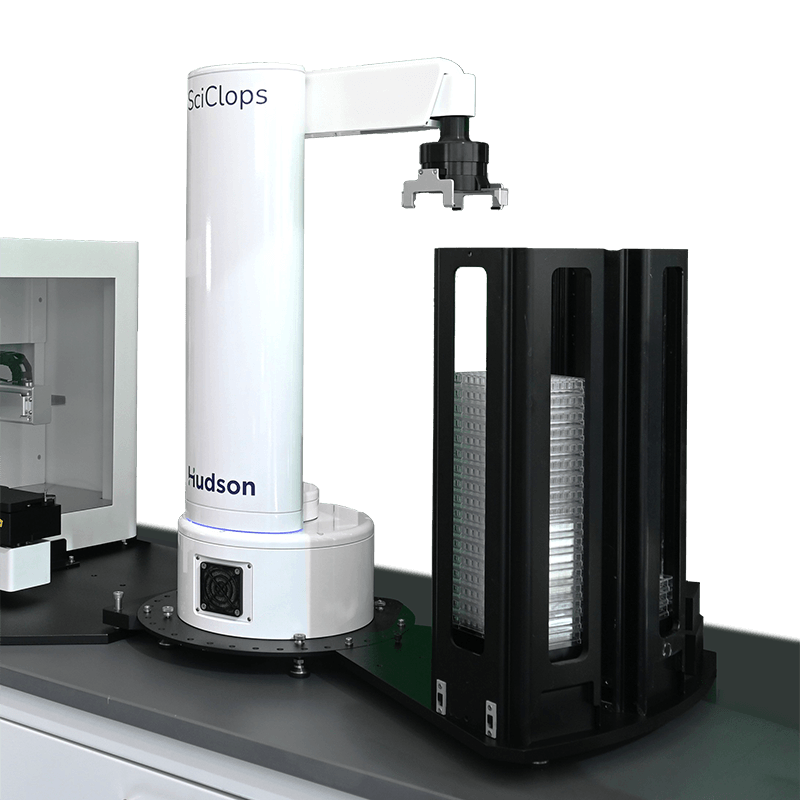
PlateCrane™ SciClops™ Robotic Arm is Hudson Lab Automation’s latest robotic arm with extended reach for accessing tough to reach instruments
Copyright 2025 ® Hudson Lab Automation
Get the details in "Adaptable Automation for Rapidly Changing Labs"