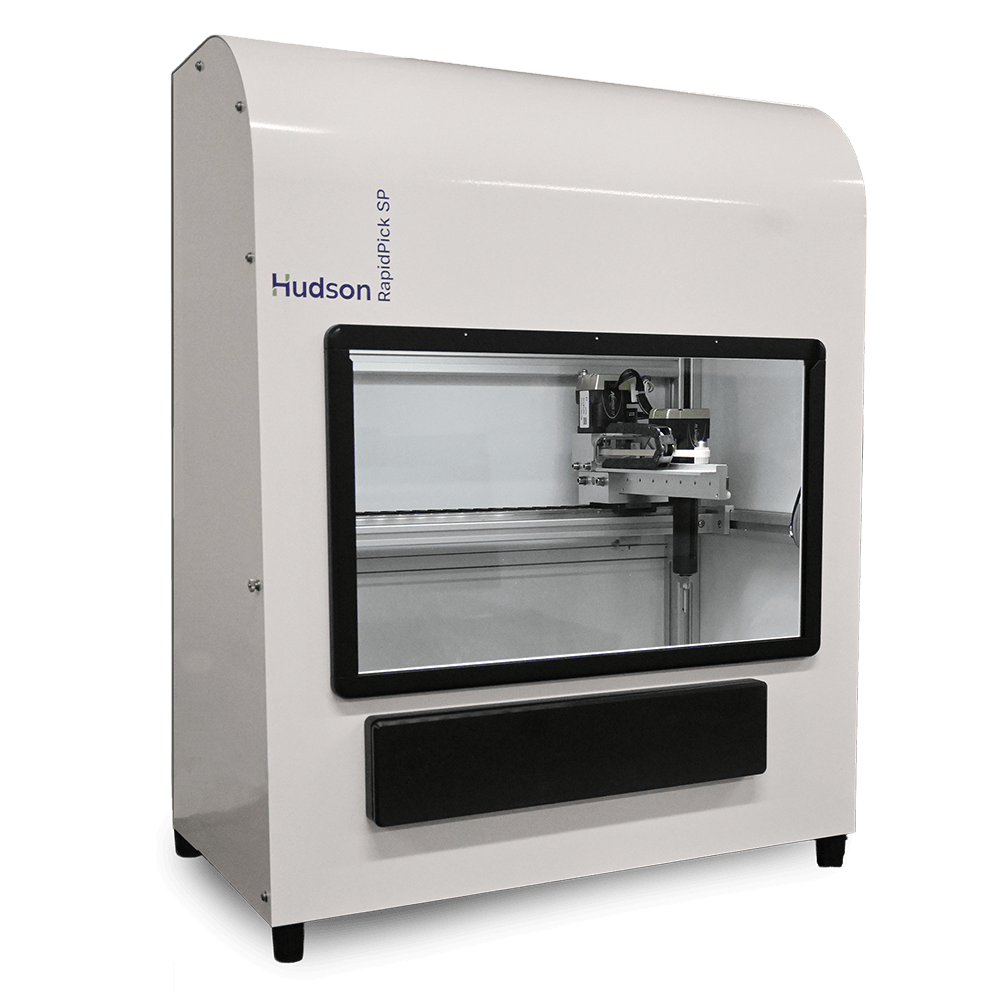
RapidPick uses image analysis and user-defined selection criteria to detect and characterize colonies based on morphological and image characteristics. The resulting images and colony meta data can also support more advanced, data-driven workflows in which external analytical or AI models determine which colonies should be selected for downstream processing.
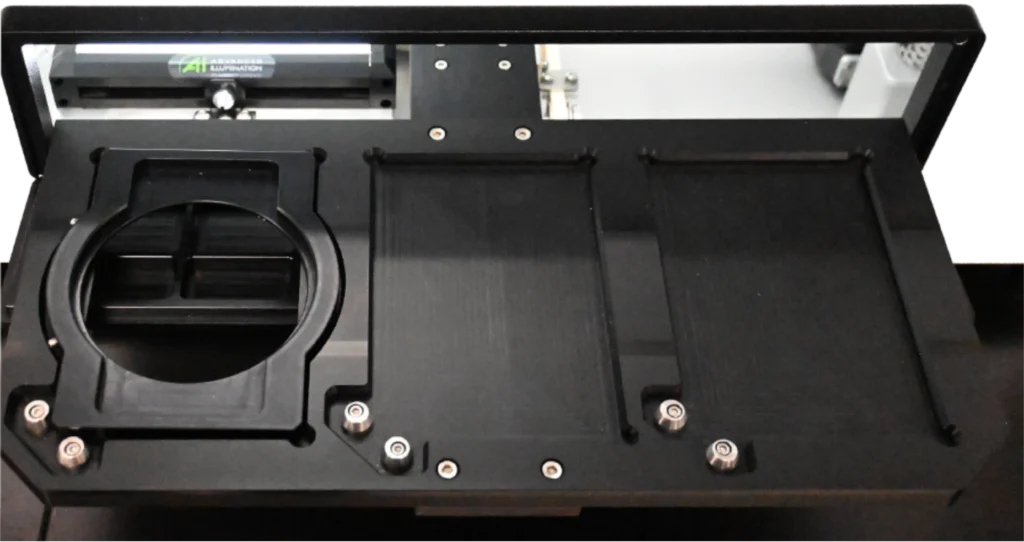
RapidPick SP supports colony picking from Petri dishes, NUNC OmniTrays, and ANSI/SLAS-footprint microplates. It supports common shallow- and deep-well destination plates, including 24-, 96-, and 384-well formats, providing flexibility across microbial isolation, screening, and re-arraying workflows.
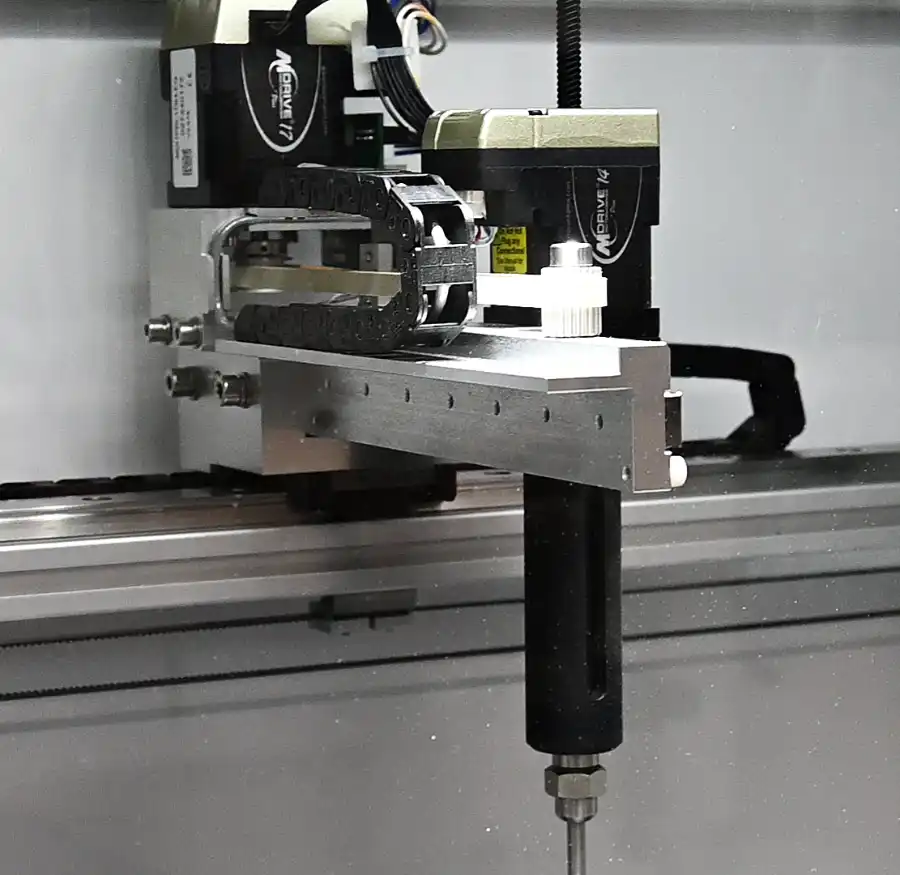
RapidPick SP uses a reusable tungsten picking pin that is washed and sterilized with direct heat between picks. The tungsten construction allows the pin to heat rapidly for sterilization and cool quickly before the next colony is picked.
Its compact footprint makes RapidPick SP particularly well suited for space-constrained environments, including anaerobic chambers and biosafety cabinets. This makes it an attractive option for microbiology workflows where colony picking needs to take place within a controlled environment.
Yes. RapidPick SP can operate as a standalone automated colony picker or be integrated with automated plate handling to increase plate capacity and walk-away operation. For more extensive workflow automation, it can also form the colony-picking component of a RapidPick Connect system.
RapidPick SP is suitable for automated colony picking in applications including microbiome research and microbial isolation, synthetic biology, colony screening and selection, strain development, protein expression, antibiotic and antimicrobial discovery, and other microbial workflows.
Copyright 2026 ® Hudson Lab Automation
Get the details in "Adaptable Automation for Rapidly Changing Labs"