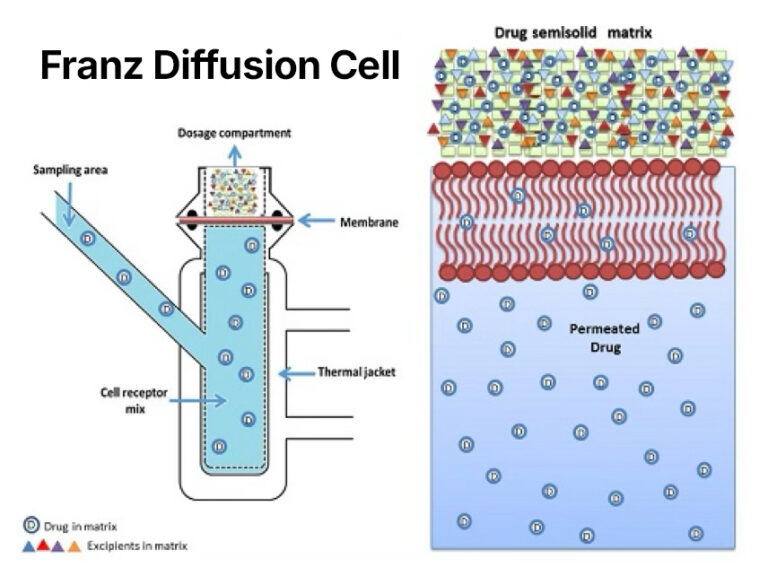
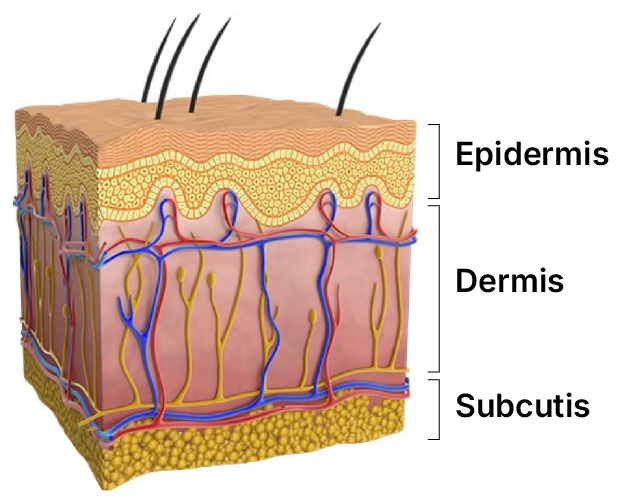
Since 1975, the Franz Diffusion Cells (FDC)1,2 have been the gold standard for studying how active ingredients move through the skin. It’s reliable for measuring diffusion through the stratum corneum and epidermis, but it stops short of telling researchers what happens deeper – in the dermis and subcutis, where therapeutic action often needs to occur.
That limitation leaves developers making decisions based on partial data.
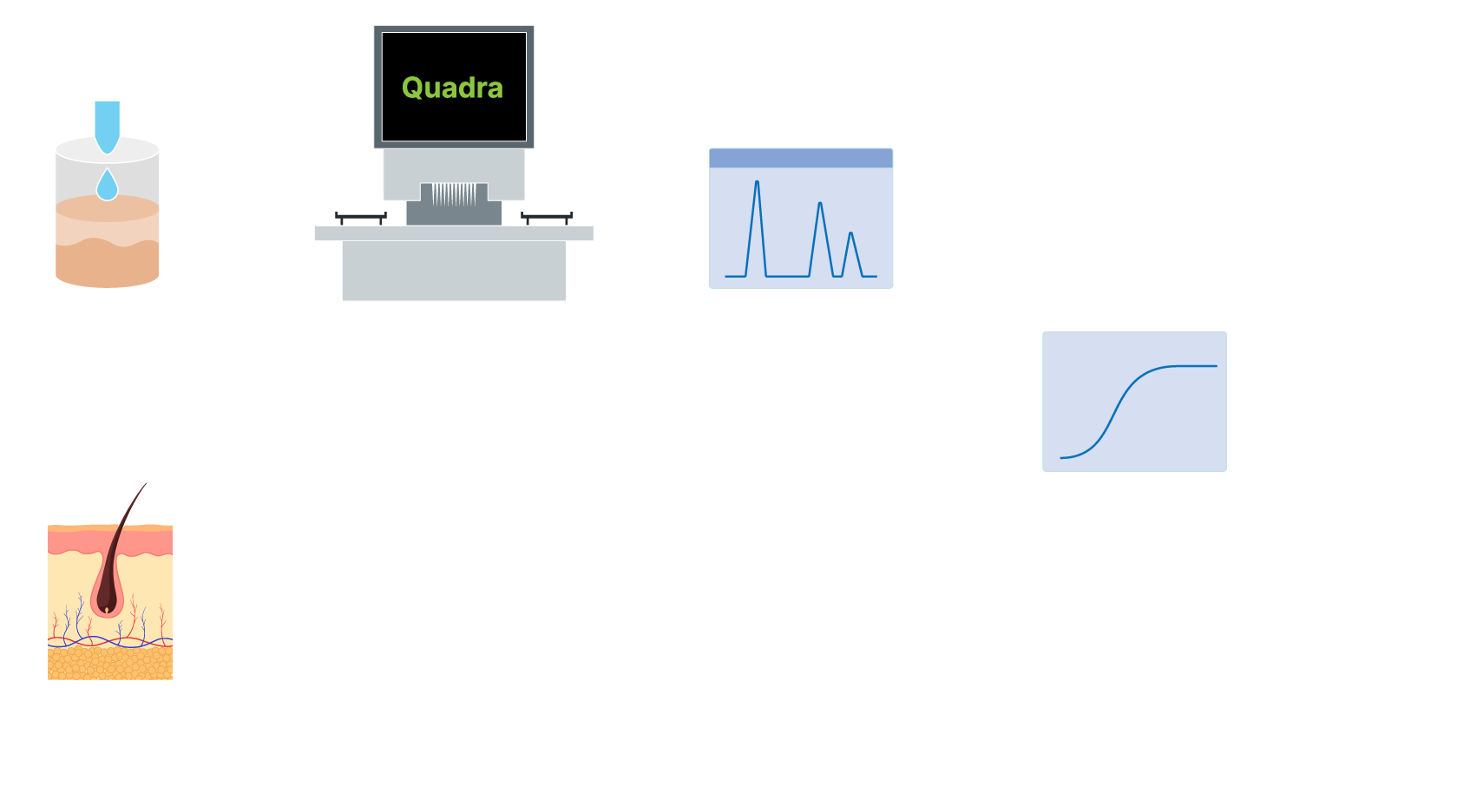
In a recent International Journal of Pharmaceutics study, GSK Consumer Healthcare (makers of Voltaren) developed a new workflow combining FDC with Open Flow Microperfusion (OFM)3, a technique for measuring drug concentrations within deeper skin layers.
By integrating these two established methods, researchers could map time-resolved diffusion profiles for diclofenac, a well-known anti-inflammatory compound, across the full skin thickness.
This approach revealed that drug penetration through the skin barrier doesn’t necessarily predict delivery into the dermis or subcutis, offering a more complete view of how topical drugs actually perform.
The outcome: a faster, more predictive way to evaluate new formulations, eliminate weak candidates early, and build more reliable in vitro–in vivo correlation (IVIVC) models.
Accurate quantitative data depends on consistent liquid handling, with high precision in sample volume during every preparation step. In GSK’s study, even small variations in pipetting could have influenced LC–MS/MS readings across the wide diclofenac range tested (1–10,000 ng/mL).
To ensure reproducibility, the team used the Tomtec Quadra 96 for automated sample preparation of receptor fluid collected from the FDC experiments.
The Quadra provided:
In short, the Quadra enabled researchers to focus on interpreting diffusion behavior – confident that their sample prep was consistent, reproducible, and ready for mass spectrometry analysis.
The combined FDC + OFM workflow gives pharmaceutical, CRO, and cosmetic development teams a better way to:
And because the FDC remains the global standard, integrating it with Quadra precision automation ensures that next-generation studies build on familiar, validated workflows — just executed faster and more reproducibly.
Copyright 2026 ® Hudson Lab Automation
Get the details in "Adaptable Automation for Rapidly Changing Labs"